Week Overview
| Time | Monday | Tuesday | Wednesday | Thursday | Friday |
|---|---|---|---|---|---|
| 09:00 09:30 |
FF |
FF |
FF |
FF |
|
| 09:30 10:30 | Keynote 1 | Keynote 2 | Keynote 5 | Keynote 6 | |
| 10:30 10:45 | |||||
| 10:45 11:00 | |||||
| 11:00 12:15 | |||||
| 12:15 12:30 | |||||
| 12:30 12:45 |
She-Lunch |
Best Paper Jury |
|||
| 12:45 13:00 |
Closing Session |
||||
| 13:00 13:15 | |||||
| 13:15 13:45 | |||||
| 13:45 14:00 | |||||
| 14:00 14:45 | |||||
| 14:45 15:00 | |||||
| 15:00 15:30 | |||||
| 15:30 16:00 | Poster Q&A | ||||
| 16:00 16:30 | |||||
| 16:30 17:00 | |||||
| 17:00 17:30 |
Opening Session |
||||
| 17:30 17:45 | |||||
| 17:45 18:00 |
EG General Assembly |
||||
| 18:00 18:45 | |||||
| 18:45 19:00 | |||||
| 19:00 19:30 |
Social Event |
Fellows' Dinner |
IPC Dinner |
||
| 19:30 21:00 |
Public Lecture |
||||
| 21:00 22:00 | |||||
| 22:00 22:30 |
Daily Program
Full Program
Full Paper 1
Animating Humans with Gestures and Style
-
Conversational Gesture Model (CGM): Extending Speaker-Centric Audio-Driven Motion Generation to Full Conversation Gestures
-
Skeletal-Driven Animation of Anatomical Humans via Neural Deformation Gradients
-
Dance Like a Chicken: Low-Rank Stylization for Human Motion Diffusion
-
SkinCells: Sparse Skinning using Voronoi Cells
-
VQ-Style: Disentangling Style and Content in Motion with Residual Quantized Representations
Full Paper 2
Diffusion and Beyond: Controlled Image Generation and Stylization
-
Graph-based Black and White Stylization
-
Palette Aligned Image Diffusion
-
Latent Diffusion-GAN: Adversarial Learning in the Autoencoded Latent Space
-
Edge-preserving noise for diffusion models
-
TextFlux: An OCR-Free DiT Model for High-Fidelity Multilingual Scene Text Synthesis
Full Paper 3
Structured for Speed: Spatial Representations for Real-Time Rendering
-
Real-Time Rendering of Dynamic Line Sets using Voxel Ray Tracing
-
EBOAT: Error-Bounded Adaptive Tessellation of Singularities for Real-Time Catmull-Clark Subdivision Surfaces Rendering
-
Encoding Occupancy in Memory Location for Efficient and Compact High-Resolution Voxel Structures
-
NePO: Neural Point Octrees for Large-scale Novel View Synthesis
-
NAADF: Globally Illuminated VoxelWorlds Accelerated with Nested Axis-Aligned Distance Fields
Full Paper 4
Covering the Surface: Texture Synthesis, Patterns, and Compression
-
Real-time by-example texture synthesis and filtering using local statistics exchange
-
Variable-Rate Texture Compression: Real-Time Rendering with JPEG
-
ProcTex: Consistent and Interactive Text-to-texture Synthesis for Part-based Procedural Models
-
Lightmap Compression with Color-Coherent UV Clustering and Cascade Texture Optimization
-
Controllable Intrinsic Surface Pattern Generation Using Slime Mold Simulations
Full Paper 5
Learning Surface and Scene Representations
-
Mesh Processing Non-Meshes via Neural Displacement Fields
-
Basis Networks: Learning basis functions for free-form triangulations
-
Self-supervised Learning of Fine-to-Coarse Cuboid Shape Abstraction
-
TLC-Plan: A Two-Level Codebook Based Network for End-to-End Vector Floorplan Generation
-
Floorplan Generation by Alternating Geometry and Semantics Optimization
Full Paper 6
Go with the Flow: Fluid Simulation and Rendering
-
Adaptive Optical Layers: Efficient Tall Cell Grids for Liquid Simulation
-
A Semi-Analytical Energy Model for Particle-Based Fluid Simulation Involving Complex Moving Boundaries
-
Dripping Thin Films for Real-time Digital Painting
-
Fluid Composer: Fluid Detail Composition and Rendering Using Video Diffusion Models
-
A Particle-Based Approach to Extract Dynamic 3D FTLE Ridge Geometry
Full Paper 7
Structural Geometry: From Fabrication to Fracture
-
Field-Aligned Surface-Filling Curve via Implicit Stitching
-
Strain-Field Based Segmentation for Fabric Formwork
-
Designing inflatable shells using unstructured meshes
-
DeepFracture: A Generative Approach for Predicting Brittle Fractures with Neural Discrete Representation Learning
Full Paper 8
From Pixels to Scenes: 3D Reconstruction and Generation
-
ZeroScene: A Zero-Shot Framework for 3D Scene Generation from a Single Image and Controllable Texture Editing
-
GS-2M: Material-aware Gaussian Splatting for High-fidelity Mesh Reconstruction
-
Layer3D: A 3D Layered Representation for Multiview Vector Graphics
-
GeoFusionLRM: Geometry-Aware Self-Correction for Consistent 3D Reconstruction
-
UniCross3D: Unified Cross-View and Cross-Domain Diffusion for Consistent Single-Image 3D Generation
Full Paper 9
Motion in the Wild: From Individuals to Crowds
-
Physics-Based Motion Tracking of Contact-Rich Interacting Characters
-
Step2Motion: Locomotion Reconstruction from Pressure Sensing Insoles
-
ContactVision: Learning Foot Contact from Video for Physically Plausible Gait Animation
-
Herds from Video: Learning a Microscopic Herd Model from Macroscopic Motion Data
-
MPACT: Mesoscopic Profiling and Abstraction of Crowd Trajectories
Full Paper 10
Light Transport: Sampling, Waves, and Denoising
-
Wave Tracing: Generalizing The Path Integral To Wave Optics
-
Gradient-Domain ReSTIR Path Tracing
-
Statistical Denoising of Transient Rendering
-
Stochastic Pairwise MIS for Unbiased Large-Kernel Reuse in Real-Time
-
Deep Residual Combiner: A Learned Fusion of Spatial, Temporal, and Multiscale Correlated Pixel Estimates
Full Paper 11
Hierarchical Geometry: Optimization and Simplification
-
Convex Primitive Decomposition for Collision Detection
-
Construction of clustered HLOD with As-Simplified-As-Possible boundaries
-
Hierarchical Optimization of the As-Rigid-As-Possible Energy
-
Embedding Optimization of Layouts via Distortion Minimization
-
Contouring Signed Distance Fields by Approximating Gradients
Full Paper 12
Temporal Vision: Video Generation, Pose, and Narrative
-
Story2Board: A Training-Free Approach for Expressive Visual Storytelling
-
SAGE: Structure-Aware Generative Video Transitions between Diverse Clips
-
MultiCOIN: Multi-Modal COntrollable Inbetweening
-
SEE4D: Pose-Free 4D Generation via Auto-Regressive Video Inpainting
-
Enhancing Robust Category-Agnostic Pose Estimation through Multi-Modal Feature Alignment
Full Paper 13
2D and Beyond: Stylized Animation and Reconstruction
-
3D Character Reconstruction from Hand-drawn Model Sheets
-
Generative Cutout Animation
-
Mixed Super-Circles
-
Vector sketch animation generation with differentialable motion trajectories
Full Paper 14
Solving Deformation: Numerical Methods for Elastic Simulation
-
STAGED: Stress-Tensor Assisted Global-local-global solver for interactive Elastic shape Design
-
Interpolated Adaptive Linear Reduced Order Modeling for Deformation Dynamics
-
Progressively Projected Newton’s Method
-
Affinification: A Fine Approximation of Deformations
Full Paper 15
Digital Humans: From Capture to Control
-
DexterCap: Affordable and Automated Capture of Complex Hand-Object Interactions
-
Improving Facial Rig Semantics for Tracking and Retargeting
-
CANRIG: Cross-Attention Neural Face Rigging with Variable Local Control
-
GTAvatar: Bridging Gaussian Splatting and Texture Mapping for Relightable and Editable Gaussian Avatars
-
Neuralocks: Real-Time Dynamic Neural Hair Simulation
Full Paper 16
Measuring and Modeling Material Appearance
-
High-Gloss SVBRDF Capture Using Bounce Light
-
A Texture-Free Multi-Scale Model for Surface-Based Rendering of Knitted Fabrics
-
A Discrete Polydisperse Anisotropic BSDF Model based on the Micrograin Framework
-
HiMat: DiT-based Ultra-High Resolution SVBRDF Generation
-
Digitisation of Impasto and Gloss in Oil Paintings via Spatially Varying Bidirectional Reflectance Distribution Function Acquisition
Full Paper 17
From Leaf to Planet: Natural Environment Generation and Simulation
-
LeafFit: Plant Assets Creation from 3D Gaussian Splatting
-
TreeON: Reconstructing 3D Tree Point Clouds from Orthophotos and Heightmaps
-
HeatMat: Simulation of City Material Impact on Urban Heat Island Effect
-
Authoring Terrestrial Planets with Diffusion Models
-
Terrain Synthesis and Authoring based on Iso-Contours
Full Paper 18
Neural Appearance: Reflectance, Irradiance, and Light Transport
-
Neural Progressive Photon Mapping
-
Neural Local Inter-reflection Modeling for Garment Fold Rendering
-
Real-time Rendering with a Neural Irradiance Volume
-
A Real-Time Multi-Scale Neural Representation for Complex Surface Reflectance
-
BRDF Importance Baking: A Lightweight Neural Solution to Importance Sampling General Parametric BRDFs
Full Paper 19
Parametric and Structured Geometry
-
CADrawer: Autoregressive CAD Generation from 3D Sketches
-
Differentiable variable fonts
-
2D Piecewise Linear Scalar Fields with Invertible Integral Lines
-
Register-Efficient Linear-Time Evaluation in the Bernstein Basis
-
Improving the watertightness of parametric surface/surface intersection
Full Paper 20
Immersive and Interactive: Rendering Across Displays and Devices
-
Robo-Saber: Generating and Simulating Virtual Reality Players
-
Real-Time Neural Materials on Mobile VR
-
ML-PEA: Machine Learning-Based Perceptual Algorithms for Display Power Optimization
-
ProjectiveShading: Inserting 3D Objects into Indoor Images with Complex Shadows
-
PBR-Inspired Controllable Diffusion for Image Generation
Full Paper 21
Maps and Meshes: Parameterization and Geometry Processing
-
Adaptive Use of LBO Bases by Shape Feature Scales for High-Quality and Efficient Shape Correspondence
-
TABI: Tight and Balanced Interactive Atlas Packing
-
Volume Quantization with Flexible Singularities for Hexahedral Meshing
-
Fast Injective Mesh Parameterization via Beltrami Coefficient Prolongation
-
DiskScissors: Cutting Arbitrary-Topology Solids for Bijective Mapping
Full Paper 22
Advancing 3D Gaussian Splatting
-
Multi-Spectral Gaussian Splatting with Neural Color Representation
-
RotGS: Rotation-Guided 3D Gaussian Splatting for Turntable Sequences without Structure-from-Motion
-
Adaptive Spatio-Temporal 3D Gaussian Splatting for Scenes with Oscillatory Motion
-
OUGS: Active View Selection via Object-aware Uncertainty Estimation in 3DGS
-
Splat-based Metal Artifact Reduction in Cone-Beam CT via Polychromatic Modeling
Short Paper 1
Short Paper 2
Short Paper 3
Short Paper 4
Tutorial 1
Simulation Methods for Multiphysics Phenomena in Visual Computing
Tutorial 2
A Hands-On Introduction to Discrete Differential Operators on Polygon Meshes
Tutorial 3
Deep Learning on Meshes and Point Clouds
Tutorial 4
Optimal Transport for Fluid Simulation New and Old
Tutorial 5
Fast Explicit 3D Reconstructions and How To Use Them
Tutorial 6
Effective User Studies in Computer Graphics: From Pixels to Perception
Tutorial 7
Convex Optimization in Computer Graphics
Tutorial 8
Introduction to Optimization Time Integration for Solids and Fluids
STAR 1
Magnetic Modeling and Simulation for Computer Graphics
STAR 2
Advances in Neural 3D Mesh Texturing: A Survey
STAR 3
Survey on differential estimators for 3D point clouds
STAR 4
Establishing Shape Correspondences: A Survey
STAR 5
How to Build Digital Humans?
STAR 6
Non-Rigid 3D Shape Correspondences: From Foundations to Open Challenges and Opportunities
Invited STARs - 45 min each
STAR 8
A Survey of Inter-Prediction Methods for Time-Varying Mesh Compression
STAR 9
State-of-the-art in deep learning approaches for single-panorama indoor modeling and exploration
Education 1
Education 2
Education 3
Keynote 1
The Quest for Easy Creation, Editing and Real-Time Rendering of Realistic 3D Scenes
Poster Q & A
Keynotes

George Drettakis
Inria Université Côte d’Azur
The Quest for Easy Creation, Editing and Real-Time Rendering of Realistic 3D Scenes
In this talk we will present over 25 years of research motivated by the goal of providing solutions to easily create realistic 3D scenes by capturing real content, allowing subsequent editing -- most importantly re-lighting – and allowing real-time rendering of the resulting scenes. We look back at several early projects, and how they allowed us to advance our understanding of the fundamental difficulties of developing algorithms to achieve our goals by building on physics-based rendering and traditional graphics solutions. We will then stress the importance of being open to new tools and methodologies, most importantly deep learning. We will illustrate how adopting such techniques and methodologies early provided a significant advantage, both in relighting and real-time rendering for novel view synthesis, in part by building on our expertise in realistic rendering for training data generation. We will discuss the importance of efficiency and optimization even in early stages of these research projects, and finally discuss how the power of recent generative models provides exciting new possibilities, opening the way to powerful solutions to our overarching goals of easily creating, editing and rendering realistic 3D content.
George Drettakis graduated in Computer Science (CS) in Crete, Greece, obtained an M.Sc.and a Ph.D., (1994) in CS at the University of Toronto, Canada, under the supervision of Eugene Fiume, followed by an ERCIM postdoc in Grenoble, Barcelona and Bonn (94-95). He obtained an Inria researcher position in the iMAGIS group in Grenoble (1995), and the degree of "Habilitation" at the University of Grenoble (1999). In 2000 he founded the REVES research group at INRIA Sophia-Antipolis (2002-2015), followed by the current GRAPHDECO group. He has received several awards: the Eurographics (EG) Outstanding Technical Contributions award in 2007, EG Distinguished Career Award (2024), Inria-French Academy of Sciences Grand Prix (2024), the ACM SIGGRAPH Computer Graphics Achievement Award (2025), and was named EG (2007) and ACM Fellow (2026). He was papers co-chair of the EG Rendering Workshop in 1998, EG conference in 2002 and 2008, technical papers chair of SIGGRAPH Asia 2010, associate editor for major graphics journals, and chairs the EG working group on Rendering. His research spans many topics in computer graphics, with an emphasis on rendering. He initially concentrated on lighting and shadow computation and subsequently worked on 3D audio, perceptually-driven algorithms, virtual reality and 3D interaction. In recent years he has focused more on learning-based appearance capture, relighting and novel view synthesis (previously known as image-based rendering), culminating in the development of 3D Gaussian Splatting.

Jaakko Lehtinen
Aalto University / NVIDIA Research
Graphics' Final Frontier
Computer graphics has undergone an incredible journey from its (visually) humble beginnings into our current ability to simulate the appearance and motion of complex scenes to a degree often difficult to distinguish from reality. Yet closing the final gap to the look and feel of live action footage remains elusive. At the same time, modern purely data-driven methods routinely surpass the realism of traditional first-principles graphics approaches, but come with only coarse controls.In this talk, I'll draw on my experience of working with both classic and data-driven image generation techniques and attempt to outline a vision for the "endgame" of computer graphics that synthesizes the classic first-principles approaches with the power of data.
Jaakko is an associate professor at Aalto University and a distinguished research scientist at NVIDIA Research in Helsinki, Finland. He works on computer graphics and machine learning, with particular interests in generative modelling, realistic image synthesis, and appearance acquisition and reproduction. Overall, he's fascinated by the combination of machine learning techniques with physical simulators in the search for robust, interpretable AI. Prior to his current positions, Jaakko spent 2007-10 as a postdoc with Frédo Durand at MIT. Before his research career, he worked for the game developer Remedy Entertainment in 1996-2005 as a graphics programmer, and contributed significantly to the graphics technology behind the worldwide blockbuster hit games Max Payne (2001), Max Payne 2 (2003), and Alan Wake (2009).

Lourdes De Agapito Vicente
University College London / Synthesia Technologies
Learning to See the 3D World
Building algorithms that can emulate human 3D perception, using as input single images or video sequences taken with a consumer camera, proved to be a challenging task for years but has recently seen astounding progress. For decades, machine learning solutions faced the challenge of scarcity of 3D annotations, encouraging important advances in weak and self-supervision. However, recent efforts in large-scale paired image-3D dataset collection have led to a paradigm shift and fully supervised feed-forward large 3D reconstruction models have become a reality. In this talk I will describe progress in both static and dynamic 3D reconstruction, from early optimization-based solutions that captured sequence-specific 3D models, towards more powerful 3D-aware neural representations that can be trained from 2D image supervision only, to today’s large transformer-based, multi-view feed-forward models for metric-scale dense 3D reconstruction. I will also describe the successful commercial uptake of this technology and will show its application to AI-driven video synthesis.
Lourdes holds the position of Professor of 3D Vision at the Department of Computer Science, University College London (UCL) where she heads the Vision and Imaging Science Group. She received her BSc, MSc and PhD degrees from Universidad Complutense de Madrid (Spain). In 1997 she joined the Robotics Research Group at the University of Oxford as an EU Marie Curie Fellow. In 2001 she was appointed Lecturer at Queen Mary University of London, where she held an ERC Grant. Lourdes joined UCL in 2013 and was promoted to full professor in 2015. Her research in computer vision has consistently focused on the inference of 3D information from images or videos acquired with a single camera. Lourdes has served as Program Chair for CVPR 2016 and ICCV 2023, serves regularly as Area Chair for the top Computer Vision conferences (CVPR, ICCV, ECCV) and was Keynote speaker at ICRA 2017, ICLR 2021 and ECCV'24. Lourdes is co-founder of London-based startup Synthesia, the world’s largest AI video generation platform for business, currently valued at $4B. Synthesia's text-to-video technology allows users to create professional videos directly on the browser, removing the physical constraints of conventional production.
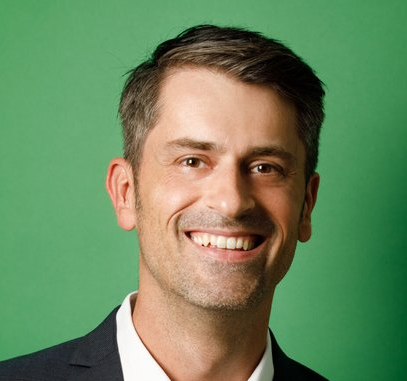
Bernd Bickel
ETH Zurich
Design in the Age of AI and Spatial Computing
As the boundaries between the digital and physical worlds blur, we face a profound opportunity to reimagine how we design the world around us. While advanced manufacturing, artificial intelligence, and spatial computing offer unprecedented potential for architecture, engineering, and art, their impact is often limited by a lack of design tools that can seamlessly bridge human creativity with physical realizability. In this talk, I will explore the transformation of design workflows from traditional CAD tools toward intelligent design systems. I will discuss how optimization-based design and tailored data-driven models enable novel approaches for interactive shape exploration and beyond, demonstrating their applicability to challenges ranging from intricate microstructures to high-performance building facades. A central theme is the control problem: the inherent tension between the probabilistic nature of modern generative AI and the high precision and editability required for professional engineering. I will conclude by reflecting on the evolving role of algorithms as creative partners. I will share a vision for a future where technology provides the "digital superpowers" that complement rather than replace human intuition, enabling us to build a more sustainable, functional, and resilient world.
Bernd Bickel is a Full Professor of Computational Design at ETH Zurich and a Research Scientist at Google. He previously served as a Professor and Vice President at ISTA and worked as a Research Scientist at Disney Research. He received his PhD in Computer Science from ETH Zurich in 2010. His research intersects visual computing, digital fabrication, and machine learning, focusing on computational tools that bridge digital design and physical manufacturing. His work includes high-fidelity performance capture, data-driven material modeling, functional metamaterials, and creative AI & generative design, integrating physics-based simulation with machine learning to create high-performance structures and systems. Bernd’s contributions have been recognized with a Technical Achievement Award from the Academy of Motion Picture Arts and Sciences (2019), the ACM SIGGRAPH Significant New Researcher Award (2017), an ERC Starting Grant (2016), and the ETH Medal (2011) for his doctoral dissertation.

Anatole Lécuyer
Inria Rennes/IRISA
Shaping the future of our 3D immersion in digital worlds
Virtual reality (VR) naturally evokes a set of advanced technologies designed to immerse users in synthetic 3D worlds simulated in real-time by a computer. Through dedicated interfaces such as head‑mounted displays, VR applications enable powerful experiences, transporting users to imaginary places or allowing them to interact with virtual characters and remote people. The first VR systems date back to the 1960s, but today we are living through a pivotal moment for the field, as it steadily moves toward widespread, mass‑market adoption. In this talk, we will explore the next steps for VR technologies. We will first argue that VR is progressively introducing greater physical engagement into 3D human-computer interaction, for example through haptic technologies (tactile or force feedback) or through virtual embodiment via self‑avatars (anthropomorphic representations of the user within a virtual environment). We will also examine the ongoing convergence of VR with physiological and neural interfaces, pointing toward future interactive systems that directly leverage users’ cognitive states and open the door to even more compelling and holistic experiences. The talk will be illustrated with some of our latest scientific results, offering a glimpse of what could become.. the future of our 3D immersion in digital worlds.
Anatole Lécuyer is Director of Research, at Inria, the French National Institute for Research in Digital Science and Technology, based in Rennes. For more than 20 years, he has been conducting research in the field of virtual reality, exploring new ways of interacting with virtual worlds, such as haptic or neural interfaces. He is the co‑author of over 250 scientific publications and 15 patents. He serves as an expert for numerous organizations, including the French National Research Agency and the European Commission. He served as Associate Editor of IEEE Transactions on Visualization and Computer Graphics, and Presence journal. He was General Chair of the IEEE Virtual Reality Conference (2025), Program Chair of IEEE Virtual Reality Conference (2015-2016) and General Chair of IEEE Symposium on Mixed and Augmented Reality (2017). Anatole Lécuyer received the Inria–Académie des Sciences Young Researcher in Digital Science Award in 2013, the IEEE VGTC Technical Achievement Award in Virtual/Augmented Reality in 2019, and was inducted into the IEEE Virtual Reality Academy in 2022.

Björn Ommer
Ludwig Maximilian University of Munich
Towards Efficient World Models for Visual Intelligence
Visual intelligence requires more than perception or the generation of plausible images or videos. It requires world models that represent the state of the world and how it changes. While recent progress in learning scene appearance from images and video has been remarkable, explicit models of kinematics are still vastly lacking: Current video models are largely computationally costly, focus on synthesizing only a single likely future, and paint future pixels rather than explicitly representing all possible motions that could lead there. In this talk, I will present recent progress toward efficient world models that make dynamics directly accessible, represent a multitude of possible futures, and allocate computation adaptively to the dynamic content of a scene rather than uniformly to individual pixels. Consequently, efficiency is not merely a matter of speed. It becomes a modeling principle that shapes what world models represent, how they reason, and what applications they make possible. The talk will then broaden the perspective and ask what happens when generative AI turns intelligence into a scalable, widely accessible commodity, propelling us from an information society toward a knowledge society with democratized access to actionable knowledge. Efficient world models, in this sense, are not simply compressed versions of larger systems, but a step toward visual intelligence grounded in dynamics, uncertainty, and efficient reasoning.
Björn Ommer is a full professor for Computer Science at LMU Munich where he leads the Computer Vision & Learning Group. Previously he was a full professor at Heidelberg University. After studying computer science and physics at the University of Bonn, he earned a Ph.D. from ETH Zurich, and held a postdoc position at UC Berkeley. He is LMU's Chief AI Officer, a director of the Bavarian AI Council, an ELLIS Fellow, and has served as an editor for IEEE T-PAMI and on the boards of numerous CVPR, ICCV, ECCV, and NeurIPS conferences. Björn's research interests are in generative AI, visual understanding, and explainable neural networks. His group developed several influential approaches in generative modeling, such as Stable Diffusion, which have seen broad adoption across academia, industry, and beyond and reflect his broader goal of advancing the democratization of generative AI.